Making a Will: The Legal Process and What to Expect

For many people, visiting a solicitor can feel overwhelming, especially if they have never had to deal with a law firm or speak to a solicitor before. It is common to associate legal services with complex jargon, lengthy delays and significant expense.
At some point in our lives, most of us will need legal advice, whether that is buying or selling a property, dealing with family matters, or making a Will. However, many people delay making a Will because they are uncomfortable discussing death or are concerned they will not understand the process.
This guide explains the legal process of making a Will, what information you may need to provide, and what you can expect when meeting with a solicitor.
What Is a Will?
A Will is a legal document that takes effect upon your death. It sets out your wishes regarding who should inherit your estate, including your money, property, investments and personal belongings. It also appoints Executors, who are responsible for administering your estate in accordance with your wishes.
Making a Will often involves meeting with a solicitor who can provide advice tailored to your circumstances. In addition, factors such as your wealth, family situation, inheritance tax position and health can all influence the advice you receive. Obtaining the right advice helps ensure your Will accurately reflects your wishes and achieves the intended outcome.
Why Is Making a Will Important?
Many people assume that their assets will automatically pass to their loved ones. However, if you die without a valid Will, the Rules of Intestacy will determine how your estate is distributed. which may not reflect your wishes.
A professionally drafted Will can help you:
- Decide who should inherit your estate.
- Appoint trusted Executors.
- Provide for children and dependants.
- Protect vulnerable beneficiaries.
- Consider inheritance tax planning opportunities.
- Reduce the likelihood of disputes after your death.
What Is the Process of Making a Will?
Step 1: Meeting With a Solicitor
Once you have arranged an appointment, you will usually meet with a solicitor to discuss your wishes and provide instructions for your Will. The solicitor may ask to see you alone to ensure that your instructions are your own and that there has been no undue influence or coercion.
During the appointment, the solicitor will take details of your personal circumstances and provide advice tailored to your situation. They will also discuss the options available and explain how a Will can best achieve your wishes.
Step 2: Receiving Your Client Care Pack
Once your instructions have been confirmed, we will send you a Client Care Pack.
This typically includes:
- A summary of your instructions.
- Details of the work to be undertaken.
- Information about costs.
- The firm’s terms and conditions.
- Relevant procedures and policies.
We will normally ask you to sign and return an authority confirming that you would like the solicitor to proceed.
Step 3: Drafting the Will
Once your instructions have been confirmed, the solicitor will prepare a draft Will and send it to you for approval. You will then have the opportunity to review the document and request any amendments.
Step 4: Signing the Will
Once you have approved the draft, we will arrange a further appointment for you to sign the Will. The solicitor will review the final version with you before asking you to sign it in the presence of two witnesses. In many cases, the witnesses will be the solicitor and a member of staff. Once properly signed and witnessed, the Will becomes legally valid.
Step 5: Safe Storage
Following completion, we will usually provide a copy of the Will for your records, while the original document is safely stored by the solicitor. Professional storage helps protect the document from loss, damage or accidental invalidation.
What Should I Expect at My Initial Will Appointment?
To provide appropriate advice, your solicitor will need to build a clear picture of your circumstances.
This often includes discussions about:
Marital Status
Your marital status can affect inheritance tax planning and determine whether additional provisions may be beneficial.
For example:
- Marriage can impact how an estate is taxed.
- Previous divorces may give rise to inheritance claims.
- Future marriages can revoke an existing Will unless you include specific provisions.
- Second marriages may benefit from trust arrangements.
Children and Dependants
If you have children, grandchildren or other dependants, your solicitor may discuss:
- How funds should be managed for beneficiaries under 18.
- Provision for future children or grandchildren.
- Trust options for young or vulnerable beneficiaries.
- Tax reliefs that may apply when you leave assets to direct descendants.
Health Considerations
Your solicitor may ask about your health and the health of your intended beneficiaries.
This can help identify circumstances where:
- You may need to complete your Will urgently.
- Additional protections may be appropriate.
- Trusts could benefit certain beneficiaries.
- Future care considerations should be discussed.
Family Dynamics
Family relationships often play an important role when drafting a Will.
Your solicitor may discuss:
- Family members you do not wish to benefit.
- Potential claims against your estate.
- Blended families and previous relationships.
- Whether you would benefit from preparing a Letter of Wishes.
Financial Circumstances
Understanding your assets and liabilities helps ensure your Will is drafted appropriately.
Discussions may include:
- Property ownership.
- Savings and investments.
- Tax planning opportunities.
- Business interests.
- Future changes to your estate.
What Information Do I Need to Provide?
To prepare your Will, your solicitor will generally require:
- Your personal details.
- Information about your assets and liabilities.
- Details of your family circumstances.
- Information about any dependants.
- The names of your chosen beneficiaries.
- Your instructions regarding how your estate should be distributed.
- Details of who should inherit if a beneficiary dies before you.
Providing accurate and complete information allows your solicitor to offer advice that is specifically tailored to your circumstances.
Frequently Asked Questions
No, there is no legal requirement to use a solicitor. However, professional advice can help ensure your Will is legally effective and accurately reflects your wishes. Read our blog here on why you shouldn’t use AI to write your Will: Fast, Free and Risky: Why You Shouldn’t Use AI to Write Your Will
The timescale varies depending on the complexity of your circumstances, but many Wills can be prepared within a matter of weeks.
If you die without a valid Will, the Rules of Intestacy will determine who inherits your estate, which may not reflect your wishes.
In particular, it is advisable to review your Will regularly following significant life events such as marriage, divorce, the birth of children or major financial changes.
How Thornton Jones Can Help
At Thornton Jones Solicitors, our Private Client team can provide tailored advice based on your personal circumstances. Whether you require a straightforward Will or more complex estate planning advice, we will take the time to understand your wishes and provide clear, practical guidance throughout the process.
We are committed to ensuring your wishes are properly documented and that your loved ones are protected in the future. If you would like to discuss making a Will, please contact our team to arrange an appointment.
The content of this blog post is for information only and does not constitute formal legal advice and should not be relied upon as advice. Thornton Jones Solicitors Limited accepts no liability for any such reliance upon this content. Where the post includes links to external websites, Thornton Jones Solicitors Limited accepts no responsibility for the content of such sites. Any link to a third-party website should not be construed as endorsement by Thornton Jones Solicitors Limited of any content, products or services which are outside our direct control.
Will Solicitors
Who Inherits My Estate If I Am Not Married or in a Civil Partnership?

Many couples live together for many years, own a home together, raise children together and build a life together without ever getting married or entering into a civil partnership.
It is therefore a common assumption that a long-term partner will automatically inherit if the other dies. Unfortunately, this is incorrect.
One of the most common misconceptions we encounter in Wills and Probate matters is the belief that “common law spouses” have the same legal rights as married couples. However, under the law of England and Wales, there is no such thing as a common law spouse. If an individual dies without a valid Will, their estate is distributed according to the rules of intestacy, regardless of how long they have been in a relationship.
What Are the Intestacy Rules?
If somebody dies without leaving a valid Will, the intestacy rules determine who inherits their estate.
The rules set out a strict order of inheritance and determine how a deceased person’s estate will be distributed. Unfortunately, an unmarried partner is not recognised under these rules. It does not matter how long you have been together, whether you own a property together, or whether you have children together. An unmarried partner does not automatically inherit under the rules of intestacy.
If you die without a valid Will, your estate will generally pass in the following order:
- Spouse or civil partner
- Children or their descendants
- Parents
- Siblings of the whole blood or their descendants
- Siblings of the half blood or their descendants
- Grandparents
- Uncles and aunts of the whole blood or their descendants
- Uncles and aunts of the half blood or their descendants
As you will see, an unmarried partner does not appear anywhere within this list.
Will My Partner Inherit If We Have Been Together for Many Years?
Many people believe that living together for a significant period of time gives them the same inheritance rights as a spouse. Unfortunately, this is not the case.
Even if you have lived together for decades, raised a family, pooled finances, and built a life together, your partner may not automatically receive anything from your estate if you die without a Will. This can come as a shock to many families and can create uncertainty, additional costs and emotional stress at an already difficult time.
What Happens If We Own Our Home Together?
If a cohabiting couple owns a property together, what happens following death depends on how the property is owned.
There are two main ways a property can be owned jointly:
- Joint Tenants
- Tenants in Common
Joint Tenants
If a property is owned as Joint Tenants, the property automatically passes to the surviving owner when one owner dies. This is known as the right of survivorship. The property does not pass under the terms of a Will or under the rules of intestacy. Instead, ownership automatically transfers to the surviving joint owner.
Tenants in Common
If a property is owned as Tenants in Common, each owner owns a separate share of the property. When one owner dies, their share passes under the terms of their Will or, if there is no Will, under the rules of intestacy. Unlike Joint Tenants, the deceased’s share does not automatically pass to the surviving owner. This can create significant difficulties for unmarried couples if no Will has been put in place.
What Problems Can Arise If There Is No Will?
If a couple owns their property as Tenants in Common and one partner dies without a valid Will, their share of the property will pass under the rules of intestacy. As an unmarried partner is not entitled to inherit under the intestacy rules, the deceased’s share may pass to children, parents or other family members instead. This can create complications, particularly where the surviving partner wishes to continue living in the property.
Why Making a Will Matters
Making a Will is one of the most important steps you can take to protect your loved ones and ensure your wishes are respected after your death. A valid Will gives you control over how your estate is dealt with and distributed. It can also help avoid unnecessary stress, uncertainty and potential disputes for those left behind.
A Will allows you to decide:
- Who inherits your estate, including your property, savings and personal possessions.
- Who will act as your Executor.
- Who will look after your minor children.
- How specific assets should be distributed.
- Whether unmarried partners should benefit from your estate.
Regardless of whether your estate is large or small, a Will provides certainty and peace of mind.
Do Unmarried Couples Need a Will?
For unmarried couples, putting a Will in place is particularly important.
Without a valid Will, your partner may have no automatic right to inherit from your estate, regardless of how long you have been together. A properly drafted Will allows you to ensure your partner, children and other loved ones are provided for in accordance with your wishes.
No. Under the rules of intestacy, an unmarried partner does not automatically inherit from their partner’s estate.
There is no legal concept of a common law spouse in England and Wales. Living together does not give the same inheritance rights as marriage or civil partnership.
It depends on how the property is owned. If the property is held as Joint Tenants, the surviving owner will usually inherit automatically. If it is owned as Tenants in Common, the deceased’s share passes under their Will or the rules of intestacy.
Yes. A valid Will can ensure that your partner receives part or all of your estate according to your wishes.
Generally, anyone aged 18 or over who has the necessary mental capacity can make a Will.
How Thornton Jones Can Help
If you are living with a partner and have not yet made a Will, now is the time to consider your arrangements.
A simple conversation today could prevent significant difficulties for your loved ones in the future. Our experienced Wills and Probate team can advise you on protecting your partner, ensuring your assets pass according to your wishes, and putting in place a professionally drafted Will tailored to your circumstances.
To discuss your options or arrange an appointment with a member of our team, please contact Thornton Jones Solicitors today.
Will Solicitors
The content of this blog post is for information only and does not constitute formal legal advice and should not be relied upon as advice. Thornton Jones Solicitors Limited accepts no liability for any such reliance upon this content. Where the post includes links to external websites, Thornton Jones Solicitors Limited accepts no responsibility for the content of such sites. Any link to a third-party website should not be construed as endorsement by Thornton Jones Solicitors Limited of any content, products or services which are outside our direct control.
Government Cohabitation Consultation and the Rules of Intestacy

A lot of couples in England and Wales are part of the fastest-growing family type by being cohabitants. Despite this, the law has not kept up with what is going on in society especially in terms of inheritance. The Government has announced a consultation proposing major reforms to cohabitation law including how estates are dealt with under the rules of intestacy.

What is intestacy?
Intestacy is what happens to your estate when you die and do not have a legally valid Will specifying what should happen to your assets. Your assets will pass under statutory law rather than by your personal wishes. Intestacy rules establish a hierarchy of heirs which prioritises spouse/civil partner, children, parents and other relatives.
What would happen to my estate under the rules of intestacy?
People often think that unmarried cohabiting couples have the same rights as married couples when it comes to inheritance, but this is not the case. The intestacy rules are strict in that only spouses and civil partners have automatic rights to inheritance whereas cohabiting couples stand to inherit nothing regardless of how long they have been together. An estate would pass to the next living relatives such as children, parents or other surviving relatives, under the existing rules of intestacy.
What issues can arise to unmarried cohabiting couples under the rules of intestacy?
Families can face unnecessary stress especially if a surviving partner has been left financially vulnerable or at risk of losing their family home by not inheriting their partner’s estate.
Claims can be made by the surviving cohabiting couple under the Inheritance (Provision for Family Dependants) Act 1975 but these all depend on the circumstances and are often costly, time-consuming and can be uncertain.
The Government is now recognising that the law does not relate to the modern family life of cohabiting couples and explicitly states that the current law can leave bereaved partners with no inheritance which can create an unfair outcome and hardship.

BREAKING NEWS: Government Moves to Strengthen Rights for Unmarried Couples
The Government has launched a long-awaited consultation on cohabitation rights which is an important step towards better protection for unmarried couples. For family lawyers, this reform is overdue.
What changes will the reform bring to the rules of intestacy?
The consultation is proposing to reform the intestacy rules by changing automatic inheritance rules to include qualifying cohabitants under an eligibility criterion such as couples having lived together for a minimum time period and/or having had a child together. They are looking to reduce the reliance on court claims which can be costly and provide more certainty to cohabiting families.
The proposals will form part of a broader change to cohabiting couples who are undergoing a separation, divorce and other family law areas.
These proposed changes will be a big change and a potential sigh of relief to a lot of cohabiting couples however, they do not take effect yet and are only under consultation. When the reform will be implemented is unknown and what changes and criteria it will introduce remain uncertain.

Our thoughts on the proposed changes
Tara Carrington-fletcher, Private Client Team at Thornton Jones says: “These proposed reforms are a positive step towards recognising modern family life and could provide much-needed protection for cohabiting couples. Until any changes become law, unmarried partners remain vulnerable under the rules of intestacy, making a professionally drafted Will the best way to safeguard loved ones.”
What steps can I take to protect a cohabiting partner?
Whilst cohabiting couples remain unprotected under the rules of intestacy, we strongly recommend that any cohabiting couples should consider making a Will to ensure that their estates pass to who they want it to go to.
Wills are very important documents that ensure that your assets pass how you want them to go. Not a lot of people consider the consequences of not having a Will and just automatically assume that under intestacy, their assets will pass where they want them to go to but, especially where cohabiting couples are concerned, this is not always the case.
When preparing Wills at Thornton Jones, we look not only at the distribution of your assets, but also the best way to make your estates tax efficient and assist with planning for the future. We ensure that all aspects of your estate are covered and provide the relevant advice for lifetime planning.
If you could benefit from having a Will prepared or have any queries about the process, please get in contact with us to arrange an initial appointment.
Need Advice About Cohabitation and the Rules of Intestacy?
If your partner has died without leaving a valid Will, understanding how the rules of intestacy apply to cohabiting couples can be particularly challenging. Unlike married couples and civil partners, unmarried partners do not automatically inherit under the rules of intestacy, regardless of how long they lived together or whether they shared children. Seeking legal advice as early as possible can help you understand your rights and explore the options available.
At Thornton Jones Solicitors, our experienced Wills, Trusts and Probate team can explain how the rules of intestacy apply to cohabiting couples and guide you through the estate administration process. We can assist by:
- Explaining how the rules of intestacy affect unmarried couples when there is no valid Will
- Advising whether you have any legal entitlement to inherit from an intestate estate
- Assessing whether you may be able to bring a claim under the Inheritance (Provision for Family and Dependants) Act 1975
- Assisting with applications for a Grant of Letters of Administration where appropriate
- Advising personal representatives and administrators on their legal duties when administering an intestate estate
- Providing guidance where there are disputes between surviving partners, family members, or other beneficiaries
- Advising on complex family circumstances, including blended families, jointly owned property, and financial dependency
- Helping you understand the steps you can take to protect your partner and loved ones through effective estate planning and professionally drafted Wills
- Offering clear, practical, and compassionate legal advice to help you navigate the probate process with confidence
The rules of intestacy can have a significant impact on who inherits an estate when someone dies without a valid Will. Obtaining timely legal advice can help you understand your rights and responsibilities, ensure the estate is administered correctly, and avoid unnecessary delays or disputes during the probate process.
Get in touch with our friendly and knowledgeable team today to discuss your options. You can call us on 01924 290 029 or contact us using our online enquiry form.
Rules of Intestacy FAQs
No. Under the current law in England and Wales, cohabiting partners do not automatically inherit if their partner dies without a valid Will, regardless of how long they have lived together. Only spouses and civil partners have automatic inheritance rights under the rules of intestacy. If you are not married or in a civil partnership, it is important to have a professionally drafted Will to ensure your partner is provided for.
Yes, in some circumstances. A surviving cohabiting partner may be able to make a claim under the Inheritance (Provision for Family and Dependants) Act 1975 if they were financially dependent on the deceased or had lived together as a couple for the required period before death. However, these claims can be complex, costly, and there is no guarantee of success.
The Government has launched a consultation considering reforms to the rules of intestacy. The proposals include allowing certain qualifying cohabiting partners to inherit automatically where specific eligibility criteria are met, such as living together for a minimum period or having children together. The aim is to better reflect modern family life and reduce the need for court claims.
No. The proposed reforms are currently under consultation and have not become law. This means the existing rules of intestacy continue to apply, and cohabiting partners still have no automatic right to inherit if their partner dies without a valid Will.
The most effective way to protect a cohabiting partner is by making a valid Will. A Will allows you to decide who should inherit your estate, rather than relying on the rules of intestacy. It also provides an opportunity to consider inheritance tax planning, appoint executors, and ensure your wishes are clearly recorded, giving greater certainty for your loved ones.
The content of this blog post is for information only and does not constitute formal legal advice and should not be relied upon as advice. Thornton Jones Solicitors Limited accepts no liability for any such reliance upon this content. Where the post includes links to external websites, Thornton Jones Solicitors Limited accepts no responsibility for the content of such sites. Any link to a third-party website should not be construed as endorsement by Thornton Jones Solicitors Limited of any content, products or services which are outside our direct control.
Wills and Probate Solicitors
Can I Gift My Property to My Children to Reduce My Liability for Care Home Fees And Inheritance Tax?

One of our most frequently asked questions is whether it is possible to gift your property to your children in order to mitigate any care home fee liability or inheritance tax liability that you/your estate may incur in the future.

There are a number of reasons why you may be considering gifting your home, such as love and affection for the recipients of the gift or wanting to ensure that your children have the security of homeownership. You may be thinking about the effect that becoming your carer will have on your relative and you may feel morally obliged to provide for that person during your lifetime, or to ensure that the ongoing maintenance of the property can be carried out if age or ill health means this is something you struggle with.
Some people simply wish to simplify their estate administration upon death to take the pressure of their loved ones at an already distressing time.
Many people believe that if they gift their property to their children it is no longer considered as one of their assets. This is not always correct.
For many people, their main residence is their biggest asset and therefore it is understandable why people would wish to protect and preserve that asset as far as possible.
Can I Gift My Property to Reduce Care Home Fees?
Gifting your property to reduce any potential care home fees you may be required to pay in the future is risky.
One risk to consider is whether such a gift will be considered to be a deliberate deprivation of assets.
A deliberate deprivation of assets is when a person intentionally reduces their assets in an attempt to avoid such assets being used to pay for care fees.
There is no set timescale after which such a gift will be disregarded by the local authority. Instead, the local authority will need to consider whether, at the time the gift of the property was made, you had a reasonable expectation that you may need care, and may need to pay for that care in the future.
If it is found that you have deliberately deprived yourself of an asset, the local authority can include the value of the asset in their financial assessment and this may lead to financial complications.
Another misconception is that if a property is placed into a trust, that it will be protected from care fees, however this can also be seen as a deliberate deprivation of assets and there are also other factors to be considered such as loss of control over the property and the taxation of trusts.
Can I Gift My Property to Reduce Inheritance Tax
Gifting your property to avoid inheritance tax is another issue that we receive lots of questions about. As the main residence is such an important asset, many people wish to “gift” it to their children, but remain living in it and using it as though they still own it.
This is called a gift with reservation of benefit. This is where a person transfers the ownership of an asset on paper, but they continue to derive the benefit of the asset for themselves, as the legal owner would be entitled to do.
HMRC has very stringent rules around gifts with reservation of benefit and such gifts cannot be used as a way to avoid inheritance tax.
One way in which you can gift your property to your children is to make the gift a true gift, this would involve relinquishing all benefit and control over the property. This would be done by moving out of the property and living elsewhere, or paying the full market rent to your children (the legal owners of the property). If the gifted property was not your main residence, relinquishing control may take the form of not receiving the rental income from the property. For many people, these options are not possible, nor desirable.
Gifting property can have implications on inheritance tax if the giftor passes away within 7 years of making the gift.
If you were to pass away within 7 years of gifting a property, the property (or part of it, depending on how much time had passed) would be treat as though you were still the legal owner at the time of your death, and depending on the value of your assets, this could push you into inheritance tax, or increase your existing inheritance tax liability. This is known as “notional capital.”

Marriage Maths: Should You Get Married to Save Inheritance Tax?
Although marriage is often seen as a personal commitment, it can also be a practical financial arrangement. This is especially true when considering inheritance tax. The legal distinction between married and unmarried couples has significant consequences when it comes to estate planning. This article examines whether entering into a marriage or civil partnership could be a strategic step to mitigate inheritance tax liabilities and safeguard assets for future generations.
Other Reasons to Exercise Caution When Gifting a Property
You should consider what would happen to the property if the person you gifted it to encountered financial difficulties. This could mean that the property would be swallowed up by creditors, and if you were intending to remain living there, you could potentially be left without a home.
Similar concerns arise if the recipient of the property went through a divorce, and the property was taken into account in the divorce settlement. There is the risk that the property could be lost to a former spouse of the person that you gifted your home to.
If the recipient is in receipt of means tested benefits, the receipt of a significant asset, such as a property, is likely to affect their entitlement to benefits and this may have a negative effect on the recipient’s quality of life/lifestyle affordability. It also may mean that the recipient has unintended stamp duty consequences (such as loss of any available first-time buyer incentives) should the recipient purchase a property of their own in the future.
There are other ways in which you can ensure that your property passes to your children upon your death, or that you can rely on assistance from those you trust to assist you with managing and maintaining your property.
Should you wish to discuss estate planning and lifetime gifting, please contact us and we will be happy to assist and advise you further.
Contact our Estate Planning Solicitors today for advice
At Thornton Jones Solicitors, our specialist Private Client team provides clear, practical advice on all aspects of estate planning.
We can assist you with:
- Drafting and updating your Will to ensure your wishes are clearly set out
- Advising on inheritance tax planning and ways to protect your estate for future generations
- Setting up and advising on trusts to manage and safeguard assets
- Preparing Lasting Powers of Attorney (LPAs) for health, welfare, and financial decisions
- Structuring your estate to support asset protection and efficient distribution
- Advising on the appointment and responsibilities of executors and trustees
- Reviewing your assets to ensure your estate is accurately recorded and properly organised
Estate planning can be complex, particularly where family circumstances, tax considerations, or asset structures require careful thought. Our team provides tailored legal advice to help you plan with confidence and clarity.
To speak to our friendly Estate Planning team, please call 01924 290 029 or contact us using our online enquiry form.
Estate Planning Solicitors FAQs
Gifting your property to your children is sometimes considered as a way to reduce care home fees, but it is not guaranteed to be effective and can carry significant legal risks. Local authorities may treat this as a deliberate deprivation of assets if they believe the gift was made to avoid care costs. At Thornton Jones Solicitors, our Estate Planning Solicitors can advise you on the safest and most appropriate ways to protect your assets. Contact us today for clear, tailored legal advice.
Gifting your property may reduce inheritance tax in some circumstances, but strict HMRC rules apply, including the “gift with reservation of benefit” and the 7-year rule. If you continue to benefit from the property, it may still be included in your estate for tax purposes. Thornton Jones Solicitors can help you understand the tax implications and structure your estate effectively. Speak to our Estate Planning team today to plan ahead with confidence.
There are several risks, including loss of control over the property, exposure to your children’s financial difficulties, divorce settlements, or benefit implications, and potential tax consequences. Once gifted, you may also lose legal ownership and security. At Thornton Jones Solicitors , we provide practical Estate Planning advice to help you make informed decisions that protect both you and your family. Get in touch with our solicitors today to discuss your options.
The content of this blog post is for information only and does not constitute formal legal advice and should not be relied upon as advice. Thornton Jones Solicitors Limited accepts no liability for any such reliance upon this content. Where the post includes links to external websites, Thornton Jones Solicitors Limited accepts no responsibility for the content of such sites. Any link to a third-party website should not be construed as endorsement by Thornton Jones Solicitors Limited of any content, products or services which are outside our direct control.
Estate Planning Solicitors
Deeds of Variation vs. Deeds of Disclaimer

A Simple Guide for Beneficiaries in England and Wales
When you inherit from someone’s estate, you may find that the original distribution does not reflect your personal wishes, family circumstances, or financial priorities. In England and Wales, beneficiaries can use two main tools to change what happens to their inheritance.

These two tools are known as a Deed of Variation and a Deed of Disclaimer. Although they may appear similar, they operate quite differently. In this guide we explain each option in straightforward language so that you can easily tell the difference between a Deed of Variation and a Deed of Disclaimer.
What Is a Deed of Variation?
A Deed of Variation allows a beneficiary of an estate to legally redirect all or part of their inheritance to someone else. The Will, or Intestacy Rules if there is no Will, remain unchanged, but the beneficiary alters how their personal share is distributed.
What are the Key Features of a Deed of Variation
- You may redirect all or part of your inheritance to any person or charity
- It must be completed within two years of the date of death for tax efficiency purposes
- Often used for Inheritance Tax (IHT) or Capital Gains Tax (CGT) planning
Common Reasons to Use a Deed of Variation
- To improve tax efficiency within the estate
- To support family members who were left out of the Will
- To correct imbalance or help maintain family harmony
- You want flexibility in how the estate is shared
- You want to reduce tax liability

"*" indicates required fields
What Is a Deed of Disclaimer?
A Deed of Disclaimer allows a beneficiary of an estate to refuse their inheritance entirely. Once you disclaim, you do not receive the asset or funds and cannot decide who gets the inheritance. Instead, the inheritance reverts back to the estate and is distributed under the Will or Intestacy Rules, if there is no Will.
What are the Key Features of a Deed of Disclaimer?
- You must disclaim before accepting the gift
- You must disclaim the whole gift, not part of it
- You have no control over the new recipient
Common Reasons to Use a Deed of Disclaimer
- Avoiding assets that may bring financial or tax complications
- Allowing the estate to pass according to an original Will without your involvement
- You are happy for the Will or Intestacy Rules to determine who benefits from the inheritance

Can I Vary a Will After Someone Has Died?
Yes, it is possible to vary a Will after someone has died, and there are legal provisions that allow for this. This process is typically done using a Deed of Variation, which gives beneficiaries the ability to alter how the estate is distributed, even after the death of the individual who made the Will. Read more…
What are the Key Differences Between a Deed of Variation and Deed of Disclaimer?
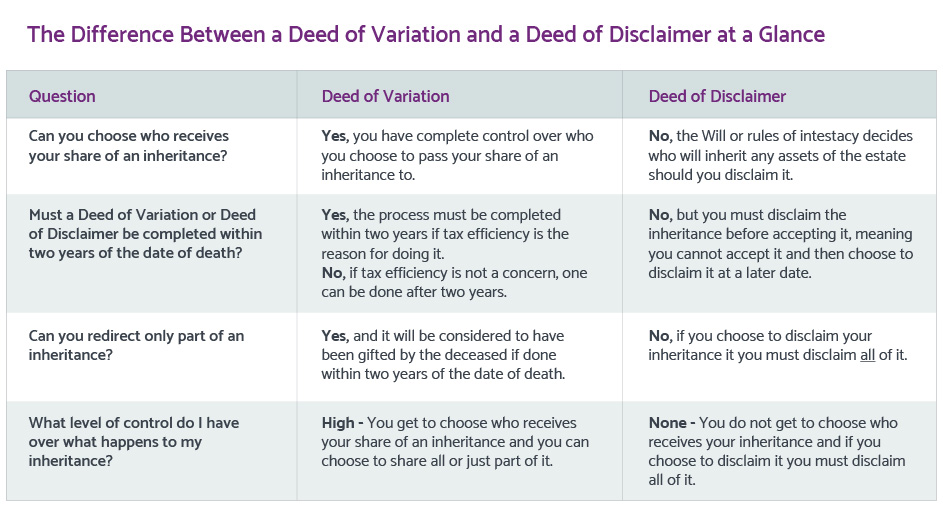
There are some key differences between a Deed of Variation and a Deed of Disclaimer which are important to be aware of. The table below summarises the key differences and will help you identify the right solution for you and your situation. If you need further help understanding the difference and deciding which is the right option for you, you can call us on 01924 290 029 or contact us using our online enquiry form.
Contact our specialist Deed of Variation Solicitors today for Advice
At Thornton Jones Solicitors, our experienced private client team can guide you through every step of putting a Deed of Variation or Deed of Disclaimer in place by:
- Explaining the key differences between a Deed of Variation and a Deed of Disclaimer, and which option best suits your circumstances
- Advising on the legal and tax implications, including Inheritance Tax (IHT) and Capital Gains Tax (CGT) considerations
- Helping you understand your rights as a beneficiary and the level of control each option provides
- Preparing the legal documentation accurately and in compliance with all formal requirements
- Ensuring any Deed of Variation is completed within the relevant two-year timeframe for tax purposes
- Liaising with personal representatives and other beneficiaries where required
Deciding what to do with an inheritance is an important financial and personal decision. Whether you wish to redirect your entitlement or formally refuse it, obtaining the right legal advice ensures your interests are protected and the process is handled correctly.
Get in touch with our friendly and knowledgeable team today to discuss your options. You can call us on 01924 290 029 or contact us using our online enquiry form.
Deed of Variation and Deed of Disclaimer FAQs
While a solicitor is not legally required for either document, professional advice is strongly recommended. A Deed of Variation must contain specific tax statements and meet formal requirements to be valid, and both documents may have long-term financial consequences.
Yes. A Deed of Variation can be completed before or after a Grant of Probate or Letters of Administration, as long as it is within two years of the date of death for tax purposes.
No. A Disclaimer is a complete refusal of the gift, and you cannot control who receives it next. The estate is distributed according to the Will or Intestacy Rules as if you had died before the deceased.
Generally, no. Once a Disclaimer is validly made, especially once the personal representative(s) act on it, it is effectively final. Beneficiaries should seek advice before signing because Disclaimers cannot simply be revoked.
Yes. When completed within two years of death and containing the correct tax statements, a Variation can allow assets to be redirected in a more tax‑efficient way. This can help reduce Inheritance Tax or Capital Gains Tax exposure in some circumstances.
Yes. A Deed of Variation can involve multiple beneficiaries if more than one person wishes to redirect their inheritance. Each person only affects their own share, unless the changes impact others who must then consent.
A Disclaimer applies to the entire gift, whether assets or debts or liabilities are attached. If the inheritance involves responsibility you do not wish to take on, a Disclaimer may be appropriate, but take legal advice, as it may have unintended legal consequences.




The content of this blog post is for information only and does not constitute formal legal advice and should not be relied upon as advice. Thornton Jones Solicitors Limited accepts no liability for any such reliance upon this content. Where the post includes links to external websites, Thornton Jones Solicitors Limited accepts no responsibility for the content of such sites. Any link to a third-party website should not be construed as endorsement by Thornton Jones Solicitors Limited of any content, products or services which are outside our direct control.
Deed of Variation Solicitors
NS&I Bereavement Claims Error – Where has it all gone wrong?
NS&I is one of the largest savings organisations within the UK, and therefore the recent headlines of “missing savings” and “prizes withheld” are alarming for everyone, not least the bereaved families whose loved ones held accounts with government-backed NS&I.

What is NS&I?
Originally established as the Post Office Savings Bank, National Savings & Investments (NS&I) is a government-owned savings provider in the UK, best known for its Premium Bonds product. Rather than paying interest, Premium Bonds offer entry into monthly prize draws, with two £1 million prizes and a range of smaller awards.
What other types of savings products do NS&I offer?
NS&I also offers other savings products, including ISAs and Income Bonds, the latter providing monthly interest payments. All funds held with NS&I are backed by HM Treasury, meaning savers benefit from a government guarantee, offering greater protection than that typically available through banks and building societies.
With no high street branches, NS&I are only contactable remotely. Money earned from NS&I customers and through its savings accounts and bonds offerings are used to fund public spending, and all deposits are backed by the UK Government with no upper limit, unlike the FSCS offered by the majority of high street banks.
How Does an NS&I Bereavement Claim Work?
When someone dies, their executors (if there is a Will) or personal representatives (if there is not) are responsible for notifying NS&I of the death, usually by providing a death certificate and relevant estate details.
Once notified, NS&I will carry out checks to identify any accounts or investments held by the deceased, including Premium Bonds, savings certificates, ISAs and Income Bonds. This step is intended to ensure that all holdings are correctly located, even where accounts may have been opened many years earlier.
NS&I will then provide instructions on how the accounts can be closed and the funds released. This typically involves completing bereavement claim forms and supplying evidence of authority to act on behalf of the estate.
Is Probate always required?
Whether probate is required will depend on the value of the NS&I holdings and the wider estate. Smaller balances may be released without probate, whereas larger estates will usually require a grant of probate (or letters of administration) before funds can be encashed and distributed to beneficiaries.
An executor is the person (or people) appointed in a Will to deal with the administration of the deceased’s estate after their death. Their role is to ensure that the deceased’s wishes, as set out in the Will, are carried out properly.
This typically includes identifying and collecting assets, settling any debts and liabilities, dealing with tax affairs, and distributing the remaining estate to the beneficiaries named in the Will. Executors may also be required to apply for a grant of probate, which provides them with the legal authority to deal with certain assets, such as bank accounts or investments.
Executors carry significant legal responsibility and must act in the best interests of the estate and its beneficiaries throughout the administration process.
Personal representatives is the legal term used to describe the individuals responsible for administering a deceased person’s estate. This includes executors where there is a valid Will, or administrators where there is no Will (intestacy).
In practical terms, personal representatives carry out the same core duties: identifying and valuing the estate, collecting assets, paying any debts and taxes, and distributing the estate to the rightful beneficiaries. Where a Will exists, the named executors automatically become the personal representatives once probate is granted.
They are legally responsible for ensuring the estate is administered correctly and in accordance with either the Will or the rules of intestacy, depending on the circumstances.
What Has Gone Wrong with NS&I Bereavement Claims?
It has recently been revealed in the news that up to 37,500 bereavement claims have been affected due to NS&I having lost track of investments and withholding premium bond prizes from the families of their deceased customers. That said, work to identify the affected parties is still underway so the true scale of the tracing issue isn’t certain.
Despite this issue only recently making the headlines in March 2026, it has been reported that the problem was initially reported to Government ministers in December 2025.
NS&I have explained that there had been errors in identifying all deceased account holders NS&I accounts, which in turn meant that executors and personal representatives were not always repaid money from all of the deceased’s accounts despite lodging bereavement claims in the correct manner.
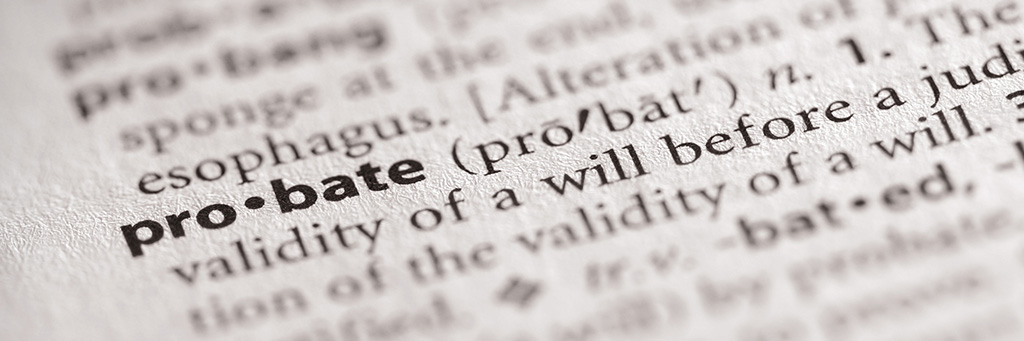
What Is Probate?
The word probate is used to describe the process involved in dealing with the administration of a person’s estate when they have died. Probate can also be used to describe the legal document giving authority to the person or persons to administer the deceased’s estate. Read more…
What is NS&I’s Response to Missing Savings and Withheld Premium Bond Prizes?
NS&I have now advised that the identification issue has been resolved and that stringent measures have been put in place to ensure that no such issues happen again. Although this is little comfort for those battling to get their money back.
NS&I have confirmed that most cases affected relate to bereavements from 2008 – 2025, and it is estimated that the money owed from NS&I to the affected deceased estates could be up to £476 million. NS&I have been criticised by the financial ombudsman for repeatedly stating that its figures were accurate and correct, with this insistence only serving to prolong the investigation.
To date, NS&I have hired new staff to assist with making contact with the affected families and they will publish details of how they will reimburse the “missing” funds. As NS&I is government backed, the funds are protected, however it is likely to take some time for NS&I to reconcile the funds with the correct people.
What are the Tax Implications and What Should Affected Families Should Consider?
Where missing NS&I funds are later identified and returned to an estate, this can have knock-on tax consequences that executors and personal representatives will need to consider. Although the recovery of assets is beneficial, it may increase the overall value of the estate and affect its tax position retrospectively.
In particular, inheritance tax (IHT) may need to be reassessed if the additional funds change the estate’s total value. This could result in further tax becoming payable or require amendments to previously submitted IHT accounts to HMRC.
There may also be capital gains tax (CGT) considerations depending on how the estate has been administered, particularly where assets have been sold or invested during the administration period. In addition, any interest or compensation paid alongside the returned funds may itself have tax implications.
Given the complexity, executors may wish to seek professional advice to ensure the estate is correctly reported and any tax liabilities are properly addressed.
"*" indicates required fields
Do You Need to Take Action on an NS&I Bereavement Claim?
NS&I has confirmed that it is working to identify and contact affected estates in relation to the bereavement claims issue and any missing or unallocated savings. Where an estate is impacted, NS&I will contact executors or personal representatives directly with details of any funds due and how these will be returned.
NS&I has also advised that it is not necessary to use claims management companies, as this is unlikely to speed up the process and may result in avoidable costs.
However, executors should still ensure that all NS&I assets have been properly included in the estate administration. Where there is uncertainty or concern about missing funds, legal advice may be helpful to ensure the estate is fully and correctly administered.
Contact our Wills & Probate Solicitors today for Advice
At Thornton Jones Solicitors, our specialist Private Client and Wills & Probate team advises individuals, executors and families dealing with estate administration issues, including complex bereavement claims involving financial institutions such as NS&I.
We can assist you by:
- Advising on your duties as an executor or personal representative
- Helping you trace and identify missing assets within an estate, including NS&I savings and Premium Bonds
- Guiding you through the probate process where required
- Assisting with correspondence and claims to financial institutions
- Advising on delays, discrepancies, or missing funds in estate administration
- Supporting you with any tax considerations arising from delayed or additional estate assets
Dealing with an estate can be complex, particularly where assets are missing, delayed or incorrectly recorded. If you are concerned about NS&I bereavement claims or believe an estate may be owed funds, our team can provide clear, practical legal advice tailored to your circumstances.
To speak to our friendly Wills & Probate team, please call 01924 290 029 or contact us using our online enquiry form.
Wills and Probate Solicitors FAQs
If you believe funds may be missing, you should first ensure that a bereavement claim has been properly submitted to NS&I. If this has already been done, it is advisable to wait for NS&I to contact you, as they have confirmed they are proactively identifying affected cases.
If you remain concerned, executors or personal representatives can contact NS&I directly to request a review of the deceased’s accounts and confirm whether all funds have been accounted for.
NS&I offers a tracing service as part of its bereavement process. Executors or personal representatives can submit details of the deceased, and NS&I will attempt to locate any accounts or investments held in their name.
This is particularly important where paperwork is incomplete or where the deceased held Premium Bonds or older savings products.
Not always. Whether a grant of probate is required depends on the value of the assets held with NS&I. For lower-value holdings, NS&I may release funds without a grant. However, for larger estates, probate is usually required before funds can be encashed and distributed.
NS&I has stated that it is working to identify affected customers and will contact families directly where issues are found. However, given the scale of the problem and the time period involved, executors may wish to be proactive if they suspect something has been missed.
In addition to the return of any missing funds, affected estates may be entitled to interest and, in some cases, compensation. The exact amount will depend on the circumstances, including how long the funds were outstanding and whether there has been any financial loss as a result of the delay.
Yes. Premium Bonds remain eligible for prize draws for a period after death (usually up to 12 months), provided the funds have not yet been encashed. Any prizes won during this time should form part of the deceased’s estate and be payable to the beneficiaries.
Potentially, yes. If additional funds are later identified and returned to the estate, this could impact the overall value of the estate for inheritance tax purposes. This may require the personal representatives to revisit earlier tax calculations and, in some cases, submit corrective information to HMRC.
Not necessarily. NS&I has indicated that families do not need to use claims management companies, and many straightforward cases can be handled by executors directly. However, legal advice may be helpful where there are complications—such as missing funds, tax implications, or disputes between beneficiaries.
There is no fixed timeframe. Given the number of potentially affected cases, it may take some time for NS&I to investigate and reconcile all accounts. Executors should be prepared for delays, particularly in more complex cases or where older accounts are involved.
The content of this blog post is for information only and does not constitute formal legal advice and should not be relied upon as advice. Thornton Jones Solicitors Limited accepts no liability for any such reliance upon this content. Where the post includes links to external websites, Thornton Jones Solicitors Limited accepts no responsibility for the content of such sites. Any link to a third-party website should not be construed as endorsement by Thornton Jones Solicitors Limited of any content, products or services which are outside our direct control.
Wills & Probate Solicitors
What is a Lasting Power of Attorney?

Lasting Power of Attorney (LPA) are a legal document that allow you to appoint someone who you trust such as a family member, friend or Solicitors as your Attorneys. The LPA gives the Attorneys the legal authority to make decisions on your behalf if you lose mental capacity or are no longer able to make decisions for yourself.

What are the different types of LPA?
Property and Finance LPA which allows your Attorneys to manage tasks such as:
- Paying bills
- Managing bank accounts
- Collecting benefits or pensions
- Selling your property
The LPA can be used whilst you still have capacity with your authority to do so or the document can specify that it should only be used if you lose capacity.
Health and Welfare LPA which allows your Attorneys to make decisions about:
- Medical treatment
- Care homes
- Daily tasks such as washing, eating and cleaning
- Life- sustaining treatment
- Access to medical records
The Health and Welfare LPA can only be used if you lose mental capacity and decisions regarding life-sustaining treatment and disclosure of medical records can only be made if you give your Attorneys authority to do so.

5 Benefits of a Lasting Power of Attorney
Whilst a Will can protect your family after you have passed, what about protecting yourself and your family should you find yourself unable to care for your own matters? In this blog by Liz Fyfe, she outlines five key benefits of having a lasting Power of Attorney in place. Read more…
Why should I make a LPA & When should I put it in place?
To give effect to your wishes as to who should make decisions on your behalf if you are unable to make decisions for yourself.
To provide peace of mind for yourself and your loved ones, by knowing that should the unexpected happen you have the correct legal paperwork in place so that your trusted attorney’s can step in and help you.
It is best to make power of attorney as soon as possible, as they need to be registered with the Office of the Public Guardian (OPG) before they can be used, and this process takes a number of weeks.
Who should put a Lasting Power of Attorney (LPA) in place?
- Anyone over 18 – It’s a common misconception that you should only do this later in life. Once you turn 18, no one has an automatic legal right to make decisions for you if you lose capacity, even parents.
- People who own property, savings, or investments – Without an LPA, if you lose capacity bank accounts can be frozen and property transactions delayed until a deputy is appointed by the Court of Protection.
- Business owners or company directors – Consideration can be given in an LPA to allow trusted individuals to manage business finances and keep things running if you are unable to act.
- Couples (married or unmarried) – It’s a common myth this is automatic, a spouse or partner cannot automatically access accounts or make financial decisions without an LPA in place.
- Parents and carers planning for the unexpected – An LPA helps ensure continuity of care and financial management if you become ill or incapacitated.
An LPA ensures people that you choose can make decisions for you if you lose capacity — without court delays, extra cost, or uncertainty.
"*" indicates required fields
Who can be an attorney and how many attorneys do I need for my LPA?
Who can be an attorney?
- Anyone over the age of 18 who has mental capacity can be an Attorney, e.g. a family member, friend or professional.
- The Attorney must understand their responsibilities of becoming an Attorney.
- You must appoint an Attorney who you can trust.
- Someone who is bankrupt cannot act as an Attorney for the Property and Finance LPA.
How many attorneys do I need?
- You can appoint as many Attorneys as you wish, it is common to have between 1 and 4 Attorneys.
- It is advisable not to have too many Attorneys and they must be able to work well with one another to make decisions.
- You can appoint Replacement Attorneys who can step in to act if one or all of the original Attorneys cannot act.
What happens if either I or one of my attorneys moves home – do I need to change my LPA?
If any party does need change their correspondence address there is no fee payable, you must however inform the Office of the Public Guardian by sending a letter which details the change. The LPA is still valid and there is no need to create new LPAs, you should simply inform the OPG and any other institutions which hold copies of the LPA if the document is in use.
You should also let your Solicitor know so they can keep a note with any original documents.
You only need new LPAs if you wish to change your Attorneys, change how they act or make any changes to your instructions and preferences.
What are the risks if I don’t have a valid LPA in place?
An LPA can only be put in place if you have the mental capacity to do so.
If you lose mental capacity without LPAs, then somebody will need to apply to the Court of Protection, to be appointed to make decisions on their behalf.
This is a Deputyship application which takes several months and is costly, adding stress to those closest to you.
Contact our specialist Lasting Power of Attorney Solicitors today for Advice
At Thornton Jones Solicitors our expert private client team can guide you through every step of preparing and registering a Lasting Power of Attorney by:
- Explaining the different types of LPAs and what each covers
- Helping you choose the right attorney(s) and ensuring they understand their duties
- Preparing the legal documentation clearly and correctly
- Completing and submitting the application to the Office of the Public Guardian
- Advising on registration and what happens next
Preparing an LPA is one of the most important steps you can take for your future planning. Get in touch with our friendly and helpful team to talk through your options and ensure your affairs are protected well in advance. If you need assistance or advice you can contact our team today on 01924 290 029 or contact us using our online enquiry form.
Lasting Power of Attorney FAQs
A Lasting Power of Attorney (LPA) is a legal document that allows you (the “donor”) to appoint one or more trusted individuals (known as “attorneys”) to make decisions on your behalf if you lose mental capacity or no longer wish to make decisions yourself. There are two types of LPA: one covering property and financial affairs, and another covering health and welfare.
It is advisable to set up a Lasting Power of Attorney while you still have full mental capacity, as it cannot be created once capacity is lost. Putting an LPA in place early ensures that your affairs can be managed smoothly in the future and avoids the need for a potentially lengthy and costly application to the Court of Protection.
If you lose mental capacity without a valid Lasting Power of Attorney in place, your loved ones will not automatically have the legal authority to make decisions on your behalf. Instead, they may need to apply to the Court of Protection to be appointed as a deputy, which can be time-consuming, expensive, and stressful during an already difficult period.
The content of this blog post is for information only and does not constitute formal legal advice and should not be relied upon as advice. Thornton Jones Solicitors Limited accepts no liability for any such reliance upon this content. Where the post includes links to external websites, Thornton Jones Solicitors Limited accepts no responsibility for the content of such sites. Any link to a third-party website should not be construed as endorsement by Thornton Jones Solicitors Limited of any content, products or services which are outside our direct control.
Lasting Power of Attorney Solicitors
Sean Hughes Death: The Dangers of a Homemade Will
The well loved Irish comedian Sean Hughes sadly passed away in 2017, leaving behind an estate of approximately £4 million. This included his main residence, estimated to be worth £1.8 million and two additional properties together estimated to be valued at £2.15 million.

The Problems With a Homemade Will
Sean’s Will was home-made, and it left “my three houses to Shelter” but at the time of his death only one of the three properties was owned in Sean’s personal name. The other two properties were owned by a company of which Sean was the sole shareholder.
Sadly, Sean’s estate is an example of some of the problems that preparing a home-made Will can lead to.
Sean’s estate had to be referred to the Court for a decision on how the estate should pass. Only now, almost 10 years after Sean’s death, has the dispute been concluded.
Why a Home-Made Will Can Be Invalidated Simply Due to the Choice of Wording
The issue with Sean’s choice of wording for the gift of the three houses to Shelter, is that strictly speaking only the one owned in Sean’s personal name was covered by this wording. The two properties owned by the company would fall into the residue of Sean’s estate, as technically they were not “his” houses, they were assets of the company.
The issue for the Court to consider, was whether the company shares (and therefore the properties owned by the company) should pass to Shelter along with the other property which was held in Sean’s personal name.

Fast, Free and Risky: Why You Shouldn’t Use AI to Write Your Will
Artificial intelligence is becoming part of everyday life. From drafting emails to answering questions and generating documents, it can feel quick, convenient and cost-effective. It’s therefore no surprise that some people are considering using AI tools to prepare their Will. Read more…
Sean Hughes left Three Properties to Shelter in his Homemade Will
Sean had been a long term supporter of the charity Shelter, and his family wished that all three properties should pass to Shelter.
The Court agreed that it was Sean’s intention that all three properties were to pass to Shelter and therefore this is what was ordered.
Sean’s family described him as a “great and generous comedian” who was “horrible at admin.” They went on to state that “we hope that Sean’s legacy will encourage others to think of people less privileged when making their final plans (ideally with at least a little bit of legal advice!)”.
What Are the Risks of Making a Homemade Will?
Sean’s case took almost 10 years and significant expense to be concluded, however these cases are becoming more common with the progression of technology and AI making it feel easier than ever to prepare your own Will.
Some of the common problems with homemade/AI made Wills are:
- Partial intestacy, where gifts fail or do not cover all the assets that the testator intended to be covered due to poor or ambiguous wording.
- Complexities of business assets etc not being fully understood and therefore not correctly provided for in the Will.
- Misunderstandings around how different jointly owned assets will pass upon death and when additional steps need to be taken to ensure that joint assets pass how the testator wishes.
- AI cannot accurately assess a person’s capacity or their mental state when they are making their Will, leaving home made Wills more open to challenge than solicitor prepared Wills where stringent records are kept regarding the making of the Will.
"*" indicates required fields
Contact our Wills & Probate Solicitors for Advice
At Thornton Jones we can assist you to prepare a legally valid Will to ensure that your estate passes to those that you wish to benefit. If you would like to make an appointment to discuss this further, please call one of our offices to arrange an initial consultation.
If you need assistance or advice you can contact our team today on 01924 290 029 or contact us using our online enquiry form.
Wills & Probate FAQs
Homemade wills can lead to serious legal issues, including unclear wording, missed assets and partial intestacy. As seen in Sean Hughes’ case, this can result in lengthy court proceedings, delays in distributing the estate and significant legal costs. Thornton Jones say that even well-meaning DIY wills can cause long-term complications. A professionally drafted will ensures your estate is protected and your wishes are clearly followed.
Yes, a will can be challenged if its wording is ambiguous or does not clearly reflect the person’s intentions. Courts may need to interpret the will, which can be time-consuming and expensive, potentially delaying the distribution of the estate. At Thornton Jones Solicitors we often see wills delayed or disputed because key details were overlooked. Seeking professional guidance from an experience and qualified solicitor can prevent unnecessary stress for your loved ones.
A solicitor ensures your will is legally valid, clearly drafted and covers all of your assets, including complex arrangements like business ownership. They also assess capacity and keep detailed records, helping to reduce the risk of disputes or challenges after death. At Thornton Jones, we make sure every will is tailored to the client’s circumstances, providing clarity, security and peace of mind.
The content of this blog post is for information only and does not constitute formal legal advice and should not be relied upon as advice. Thornton Jones Solicitors Limited accepts no liability for any such reliance upon this content. Where the post includes links to external websites, Thornton Jones Solicitors Limited accepts no responsibility for the content of such sites. Any link to a third-party website should not be construed as endorsement by Thornton Jones Solicitors Limited of any content, products or services which are outside our direct control.
Wills & Probate Solicitors
What Are Statutory Trusts That Arise on Intestacy?
When someone dies without a valid Will, they are said to have died intestate. In England and Wales, their estate is then distributed under the rules of intestacy, set out in legislation. In many cases, those rules create what are known as statutory trusts.

What is a Statutory Trust?
A statutory trust is a trust that arises automatically by law, rather than being deliberately created by a Will.
Under the intestacy rules, certain beneficiaries (most commonly children) do not receive their inheritance outright immediately. Instead, their entitlement is held on trust until specific conditions are met.
When Do Statutory Trusts Arise?
Statutory trusts commonly arise where the deceased is survived by:
- children, or
- other close family members who are entitled under the intestacy rules
The most common example is where a person dies leaving children under the age of 18.
Who Benefits Under a Statutory Trust?
Under the rules of intestacy, beneficiaries typically include:
- children (including legally adopted children), and
- their descendants if a child has already died
Each beneficiary is entitled to a share of the estate, but that share is held on statutory trust until they are legally entitled to receive it outright.

What are the Rules of Intestacy?
The Rules of Intestacy can be quite complex to understand, particularly if there are a significant number of beneficiaries. If you are married and have children, only the first £322,000 will pass to your surviving spouse, the remainder will be divided between your children and your spouse. Read more…
When Does a Beneficiary of a Statutory Trust Become Entitled?
Under a statutory trust, a beneficiary becomes absolutely entitled when they:
- reach 18 years of age, until then, their inheritance is held and managed by trustees.
Who Acts as Trustee of a Statutory Trust?
The personal representatives (usually the administrators of the estate) act as trustees of the statutory trust. They are responsible for:
- safeguarding the assets
- managing investments
- applying income or capital for the beneficiary’s benefit where appropriate
This role carries legal duties and responsibilities.
What Can the Trustees of a Statutory Trust Do With the Funds?
Trustees have limited statutory powers, including the ability to:
- use income or capital for a child’s maintenance, education or benefit, and
- invest the funds until the beneficiary becomes entitled
However, the flexibility is far more restricted than if a tailored trust had been created by a Will.
"*" indicates required fields
Why Can Statutory Trusts Be Problematic?
Statutory trusts are one-size-fits-all and may not reflect what the deceased would have wanted. Common issues include:
- beneficiaries inheriting outright at 18, regardless of maturity
- no scope to protect assets from divorce, creditors or poor decision-making
- no ability to benefit stepchildren or unmarried partners
- increased administrative burden for trustees
How Can You Avoid a Statutory Trust Being Invoked?
The only way to avoid statutory trusts arising on death is to have a properly drafted Will. A Will allows you to:
- choose who inherits
- decide when and how beneficiaries receive their inheritance
- appoint trustees of your choosing
- include flexible trust arrangements where appropriate
Contact our Wills & Probate Solicitors for Advice
Understanding statutory trusts highlights why estate planning is so important and why dying without a Will can leave loved ones with outcomes you never intended.
At Thornton Jones Solicitors our private client team can assist you in preparing a Will that reflects your wishes and will avoid unintended consequences. Contact our friendly and professional team today for more information.
If you need assistance or advice you can contact our team today on 01924 290 029 or contact us using our online enquiry form.
Statutory Trust FAQs
A statutory trust arises automatically under the rules of intestacy when someone dies without a valid Will. In contrast, a trust created by a Will is deliberately set up by the person who has died, allowing them to control how and when beneficiaries receive their inheritance.
Under a statutory trust, children usually become entitled to their inheritance when they reach 18. Until then, their share of the estate is held and managed by trustees on their behalf.
Statutory trusts are automatically created by law under the rules of intestacy, most commonly to manage the inheritance of minors. While you cannot remove the legal effect once the trust arises, there are ways to manage or conclude it. For example, the trust automatically ends when a beneficiary reaches 18, giving them full entitlement to their share. Trustees may also, in certain cases, convert the statutory trust into a bare trust to give the beneficiary more control over the assets.
The most effective way to avoid a statutory trust entirely is to make a valid Will. By doing so, you can specify who inherits, when they inherit, and under what conditions, ensuring your estate is distributed according to your wishes rather than default intestacy rules. Proper estate planning also reduces administrative burdens and helps protect assets from unintended risks.
The content of this blog post is for information only and does not constitute formal legal advice and should not be relied upon as advice. Thornton Jones Solicitors Limited accepts no liability for any such reliance upon this content. Where the post includes links to external websites, Thornton Jones Solicitors Limited accepts no responsibility for the content of such sites. Any link to a third-party website should not be construed as endorsement by Thornton Jones Solicitors Limited of any content, products or services which are outside our direct control.